
I often get calls on or around Fed announcements saying “Looks like rates may be going down on Wednesday”, as if the announcement itself is what triggers the falling of rates.
That’s not how it works.
Clients, the media, and many real estate professionals overestimate how much control the Fed has, and underestimate how quickly it’s actions affect rates.. This happens for three main reasons:
The Fed does NOT set mortgage rates.
Rates move based on shifting expectations (not when officials confirm what’s already known).
Here in the 2010s and 2020s, the Fed has far less control over inflation than most people are used to.
What the Fed Rate Actually Does
The Fed’s rate is the safest investment out there- you can withdraw anytime and it’s backed by an entity that can literally print what it owes you. That safety makes it a floor for the whole system.
After all, why would you invest in anything riskier for the same (or less) reward?
Since that floor is the safest option and everything else is comparatively riskier, we can think of it like the bottom rung of a ladder. Investors—aka your pension/401k funds, mutual funds, foreign governments, etc—build upward from that rung; demanding more reward (interest charged) as risk increases.
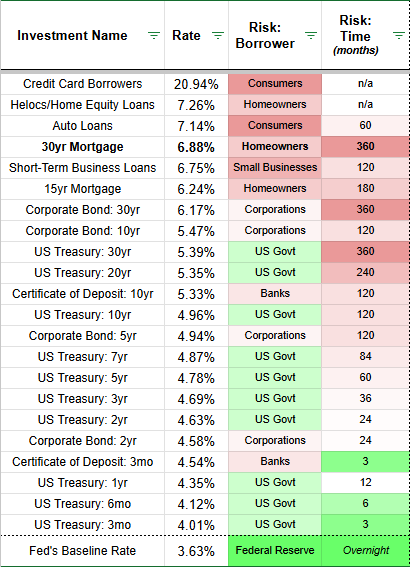
Mortgages sit further up that ladder, since a 30yr loan to a homeowner carries a lot more risk & uncertainty than an overnight loan to an entity that can print money.
Mortgage Rates Move on Expectations, Not Announcements
If you could bet on an outcome you were sure of, would you place your bet after the announcement?
Of course not. You’d place the bet well before the outcome is confirmed. That’s especially true in financial markets.
There’s no mechanism that forces rates to be a certain way until a formal announcement is made. If investors think the the fed is going to hike rates 3mo from now, then you’ll see rates adjust NOW to reflect that expectation. If you've heard about an expected rate hike or cut on the news, rates have already shifted.
So, when it comes to the Fed, the real driver isn't "what did the Fed do?" It's
a) "What do investors think they’ll do?” and,
b) “How much did reality match, beat, or miss what they expected?"
Why the Fed's Power Is Fading
Excessive govt spending, and the massive govt debt it’s created, have grown so large that it limits how aggressively the Fed can fight inflation. Economists call this “fiscal dominance”.
There are very few real solutions to this problem. This means the underlying symptoms (spending, debt) are likely to keep getting worse, and we’ll see fiscal dominance play an increasingly central role in how policymakers respond in the years ahead.