
How Rates Work
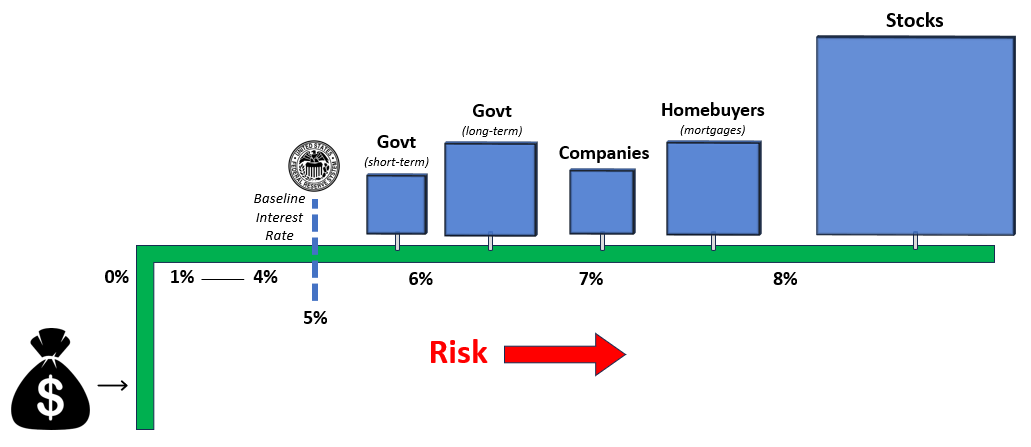
- Mortgage rates are set by huge pools of capital: pensions, 401(k)s, foreign governments, etc. The managers of all this money compare the risk of lending to you vs lending elsewhere.
- Just like the stock market, rates change multiple times a day as news, data, and expectations shift.
Base Pricing & Loan Products
- The lowest mortgage rate is reserved for the scenario with the lowest possible risk. For example: 780+ FICO, low debt, stable W2 income, primary home, and strong down payment.
- Few people fit that profile, so different loan products use different rulebooks that allow more risk in exchange for higher rates.
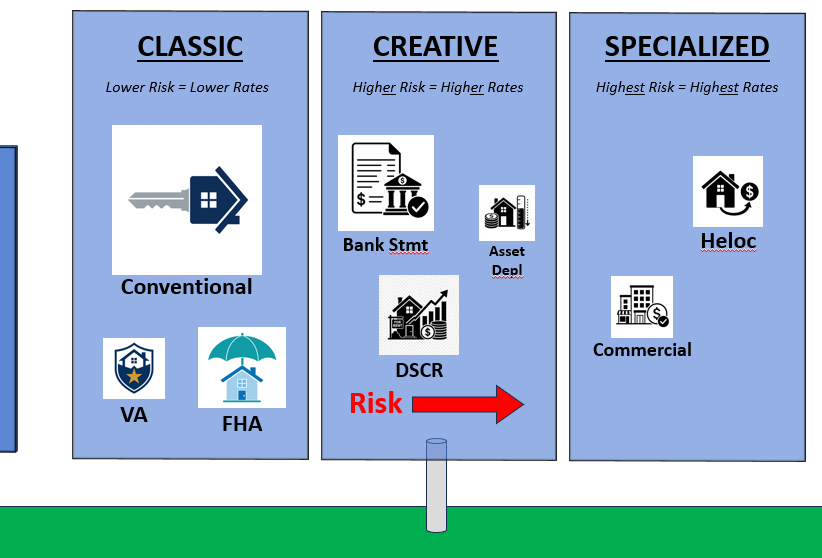
Basic knowledge of what’s on the shelf can save you from bad actors and set healthy expectations.
Points
- Points are the currency of loans; the dials used to fine-tune your mortgage. They are how all the entities providing the funds, including me, are compensated.
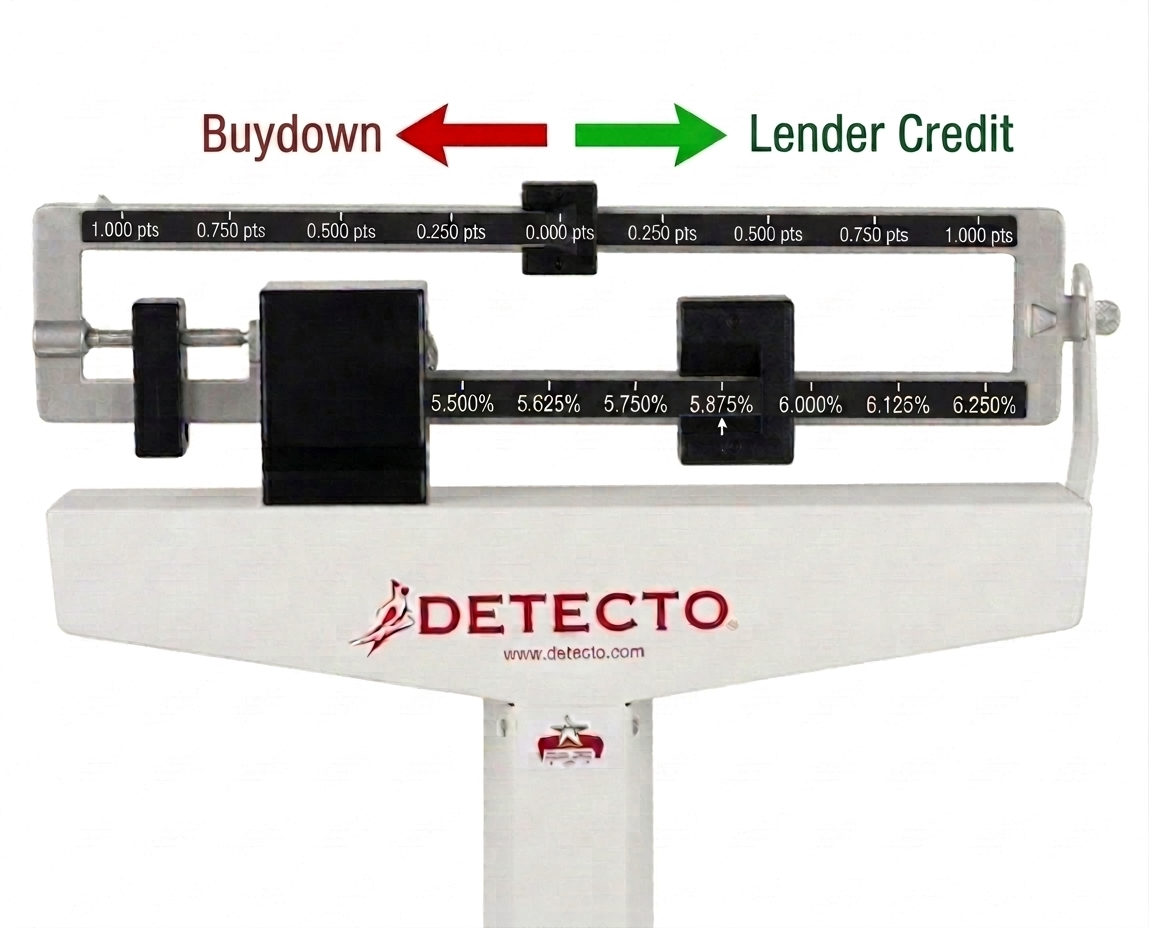
- Points let investors price smaller risk differences more precisely, like the small sliding weight on an old-school scale.
- After a loan product is chosen, a final evaluation of factors like FICO, down payment, DTI, and property type fine-tune the risk profile based on how far the file is from the optimal scenario.
The Daily Rate Menu
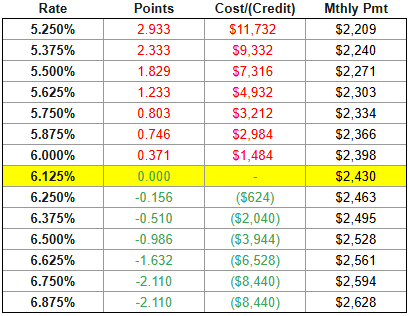
- A quote isn't a single rate. It's a menu of rate options, usually in 1/8 percent increments.
- Each option has its own cost or credit due at closing.
- You can pay more cash upfront for a lower rate or take a higher rate for more cash at closing.
Loan Amt: $400,000
The Rate Lock
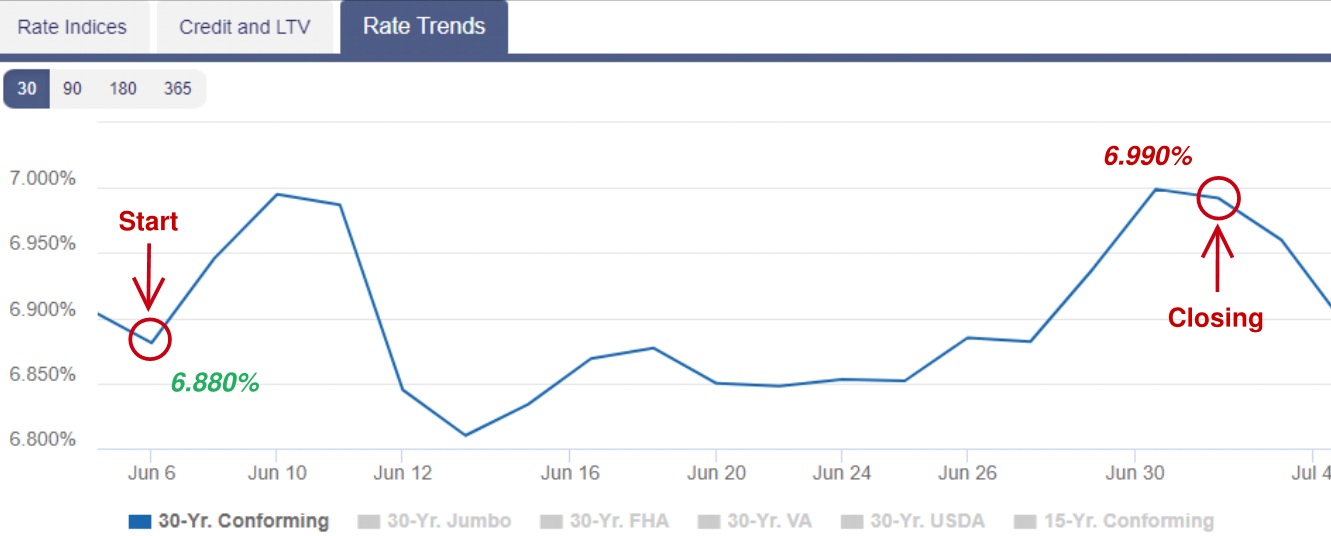
- Rates can change multiple times per day, but your loan doesn't close for another 15 to 60 days. That gap is why the rate lock exists.
- Locks only stick to a specific loan product. Switching products or lenders = forfeiting your lock.
-
Mortgage rates come from massive pools of capital (e.g., pensions, 401ks, foreign govts, etc) and the managers investing it. They decide where to put it by grading an investment’s risk. The safest place to invest is a country’s central bank bc it can always print the money it owes. Every other interest rate, including your mortgage, is set based on how much riskier it is than that baseline. Since risk is ultimately an opinion about the future, rates change multiple times a day as quickly as global news and economic expectations shift.
-
Description text goes here
-
Description text goes here
-
Once we’ve chosen the right loan product and evaluated your unique risk, it’s time to look at a quote. However, this quote isn’t actually a single number. Instead, it is presented as a "Daily Rate Menu." It shows a list of different interest rates—typically moving in those rigid ⅛% increments—each with its own specific point value attached. As the borrower, you have the power to choose any rate on that menu based on your financial goals. You can choose to trade upfront cash (paying points) for a lower long-term monthly payment, or you can accept a slightly higher interest rate to keep more of your cash in your pocket at closing. Just remember, rates change multiple times a day. Unless you lock, the exact prices on a menu (read: quote) you’ve been given will be outdated in a few hours.
-
We’ve learned pricing changes multiple times per day, but you’re applying for a mortgage that won’t fund for another 15-60 days. This gap between the rates of today and the rates of weeks/months down the line—which could be drastically different—is why we need the rate lock. The lock is a button I push. As long as your loan funds within your lock period (typically 30 days), you get the rate you were promised and the bank is able to take steps to protect themselves against possible market changes.

How Rates Work
Mortgage rates come from massive pools of capital (e.g., pensions, 401ks, foreign govts, etc) and the managers investing it. They decide where to put it by grading an investment’s risk. The safest place to invest is a country’s central bank bc it can always print the money it owes. Every other interest rate, including your mortgage, is set based on how much riskier it is than that baseline. Since risk is ultimately an opinion about the future, rates change multiple times a day as quickly as global news and economic expectations shift.
Components to Approval // Discount Points // LLPAs
While the loan product defines the rulebook, there are still plenty of elements that can be quantified as risk. Details like your FICO, down pmt, and DTI often represent deviations from the perfect cookie-cutter scenario. Because of the way the complex machines I mentioned earlier work, mortgage rates typically only move in rigid ⅛% increments. But since many of these added layers of risk represent less than a full ⅛% move in rate, lenders need a precise way to charge for these smaller risks. They do this using "points" (where 1 point equals 1% of your loan amount). By assigning a specific point value to each risk factor—like adding a half-point for a condo—points act like the small sliding weight on an old-school scale to dial in your scenario’s exact risk.
The Rate Lock
We’ve learned pricing changes multiple times per day, but you’re applying for a mortgage that won’t fund for another 15-60 days. This gap between the rates of today and the rates of weeks/months down the line—which could be drastically different—is why we need the rate lock. The lock is a button I push. As long as your loan funds within your lock period (typically 30 days), you get the rate you were promised and the bank is able to take steps to protect themselves against possible market changes.
Base Pricing & Loan Products
When determining mortgage rates specifically, investors visualize a statistically "perfect" scenario- a borrower with an 800 FICO, standard W2 income, zero debt, purchasing a single-family, primary residence with 25% down. Because this flawless scenario poses the lowest possible risk to those massive pools of capital, it receives the lowest starting interest rate. However, few ppl fit this profile, so the industry has different loan products (e.g., FHA, Bank Stmt, DSCR, etc) that act as separate rulebooks. Each rulebook makes exceptions for different types of real-world risk, but typically demands higher rates in exchange.
The Daily Rate Menu
Once we’ve chosen the right loan product and evaluated your unique risk, it’s time to look at a quote. However, this quote isn’t actually a single number. Instead, it is presented as a "Daily Rate Menu." It shows a list of different interest rates—typically moving in those rigid ⅛% increments—each with its own specific point value attached. As the borrower, you have the power to choose any rate on that menu based on your financial goals. You can choose to trade upfront cash (paying points) for a lower long-term monthly payment, or you can accept a slightly higher interest rate to keep more of your cash in your pocket at closing. Just remember, rates change multiple times a day. Unless you lock, the exact prices on a menu (read: quote) you’ve been given will be outdated in a few hours.